

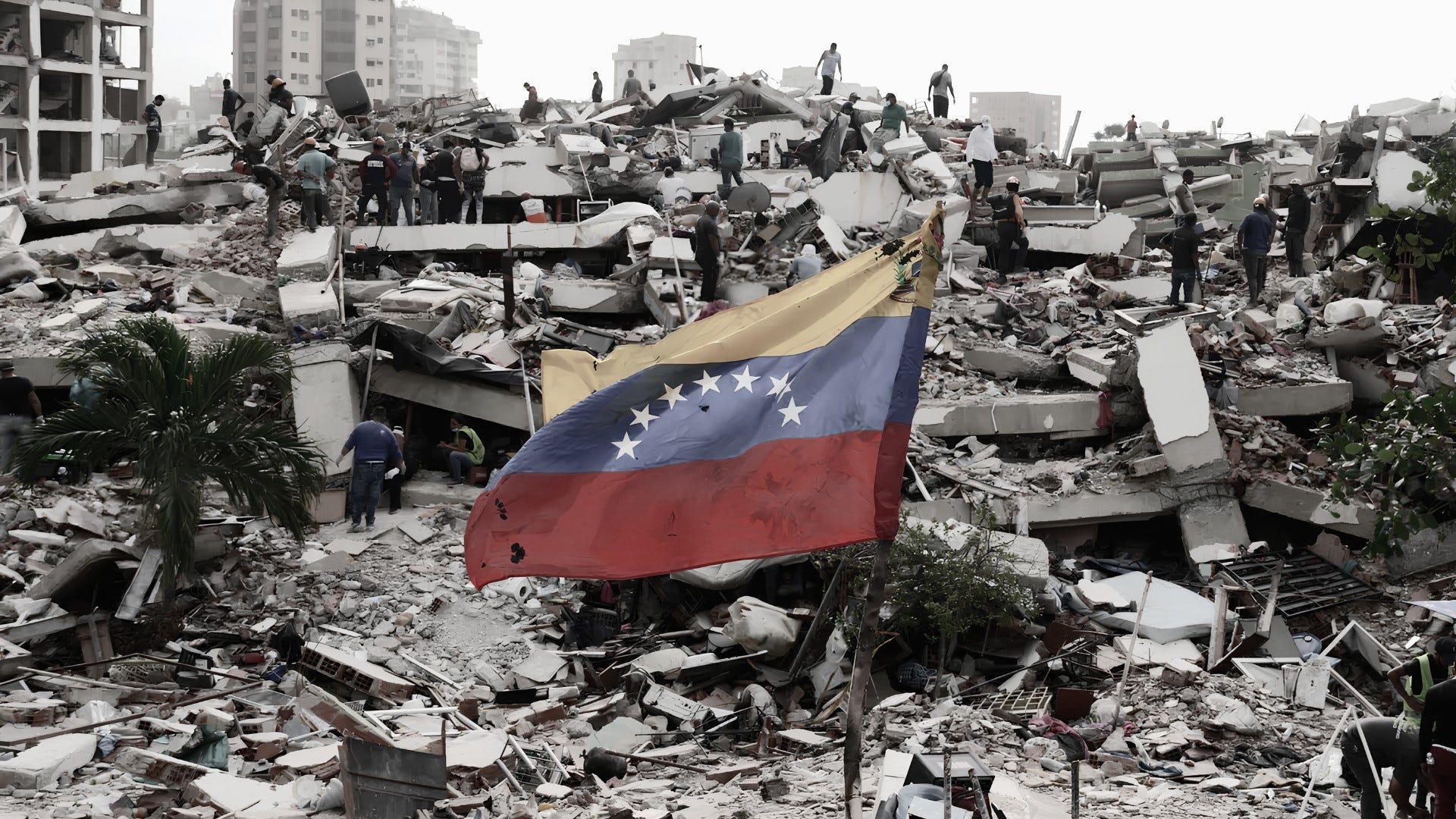
There are boxes of cash among the aid funds the United States has delivered to Venezuela after the earthquakes. The New York Times mentions it almost in passing, at the end of a sentence: nine hundred troops, nearly four hundred million in assistance and, closing the list, boxes of bills handed to the interim dictators. A box of cash is an object with the weight of another century. It demands an escort to carry it by the handles and — best or worst of all — it leaves no trail: it leaves, at most, a receipt.
The strongboxes the Crown shipped to its provinces to pay garrisons and salaries were called el situado. The word outlived the empire that coined it. Venezuela’s Constitution still uses situado for the money the central government distributes among the states. The administrative vocabulary of the colony came back before the colony itself: in Washington, officials call Rubio “the viceroy.” Without irony. Among colleagues.
The administrative vocabulary of the colony came back before the colony itself.
The viceroy was asleep in Bahrain when a call from the Situation Room woke him with the first images of La Guaira. He called the interim president, promised full assistance, and American rescue teams arrived two days later. None of this is small or false. Though he also called the disaster “a setback” — at least for the democratic transition.
Every exile knows an arithmetic that never appears in the communiqués: the difference between what is sent and what actually arrives. You learn it wiring money home, because the loss has names (the exchange rate, the money changer, whether it goes by Zelle or in bitcoin), but it is never zero. Every month, under your breath, the same question: how much made it? Now the journalist Mariana Atencio is asking that question out loud. From a moving car, between archival images from 2010, she recalls the lesson Haiti left her: the true measure of a humanitarian response is not what gets announced but what reaches people. In her video there is a cardboard sign held up among the rubble: “Where’s the aid?” Sixteen years later, the question has no answer.
Oil is, fittingly, the best-counted thing in Venezuela; it always has been, because so many eyes are on it. Since January, according to the Times, some US $8 billion of that revenue has passed into American hands. A figure the size of the economic impact the PNUD assigns to the quake.
An American officer boasted that no country had ever received such support from the US. There is a precedent, and its name is Haiti. In 2010, the United States answered the Port-au-Prince earthquake with what was then its norm: more than US $1.1 billion of its own money for the immediate crisis, plus a hospital ship, rescue brigades, millions of pounds of food and seven thousand soldiers on the ground. It also took a measure that cost almost nothing: a moratorium on deportations and TPS. Haitians stopped being returned to the ruins. On that year’s list of donors was Venezuela, which sent food, medicine and emergency oil.
How many deported Venezuelans made it home is unknown; more than one hundred remain missing under the rubble of a hotel, coldly and ironically named The Sanctuary.
Since then, the situation has reversed. Deportation flights to Venezuela left three times a week: Mondays, Wednesdays and Fridays. The June 24 flight landed at Maiquetía hours before the quake, with one hundred and forty-six Venezuelans aboard: one hundred and twenty men, nineteen women and seven children. The count was exact at takeoff. How many deported Venezuelans made it home is unknown; more than one hundred remain missing under the rubble of a hotel, coldly and ironically named The Sanctuary.
The flights stopped for eight days; nobody announced the pause — the runway imposed it. The GlobalX planes, big Boeing 320A jets chartered by ICE, returned on July 2, when Barcelona opened as the alternate airport in the east. They now fly every day. Iberia resumed its commercial flights two weeks later, at half its frequencies. The deportations waited only eight days, and doubled.
We Venezuelans are grateful for the help. Our gratitude and the demand for accountability can go together. That holds, too, when the camera points inward: uniforms strolling through oil installations, talking about Venezuelan oil.
Algún día no es una fecha, es negarse a contar el tiempo.
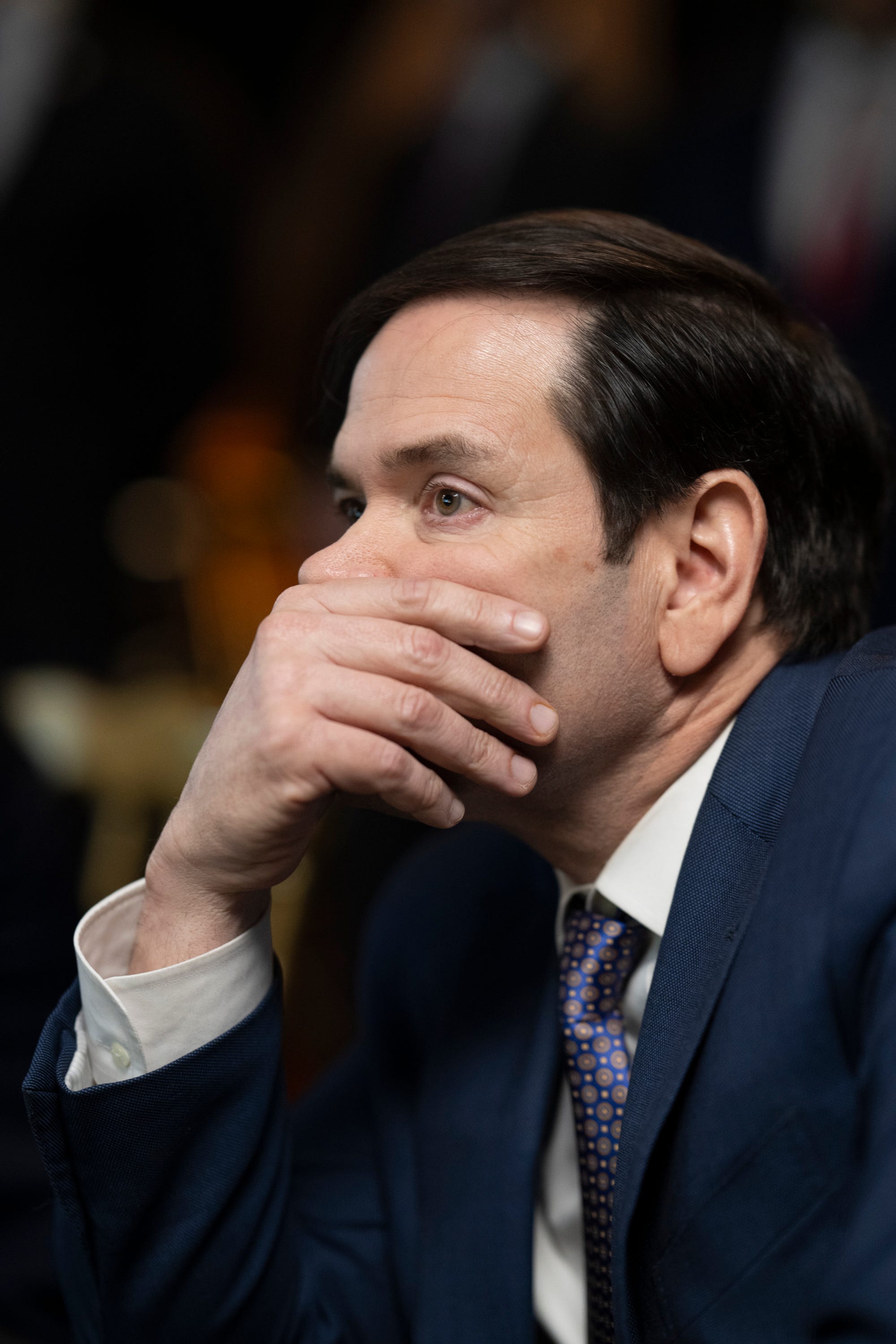
That revenue no longer reaches Caracas; it goes to the U.S. Treasury. Washington releases it in drips through private banks, with conditions on who may spend it and on what. The Times compares it to parents handing out an allowance to their children. KPMG keeps the books on the oil, and Rubio boasts that, for the first time, the money is not being stolen. How much it comes to, exactly, and what it is spent on — that is not disclosed. Even the words must clear the register: the president wrote a public thank-you to Trump and posted it only once the viceroy approved the draft. They message each other in Spanish and trade selfies on WhatsApp. Asked for the date of the elections, she answered: “I don’t know. Sometime.” Sometime is not a date; it is refusing to count time. Every Venezuelan knows that calendar: it is the credit sign at the neighborhood bodega. “No credit today; tomorrow, yes.”
Venezuelans’ revenue is watched barrel by barrel and, on its way out, it has an auditor. The dollar coming in travels in a strongbox. The government that is not trusted with its own revenue is handed charity in the least controllable form there is. Nobody is saying (yet) that the aid is going missing — only that nobody counts it the way the oil is counted.
In this country, everything is counted by someone else. An auditing firm counts the barrels, the Treasury counts the dollars, and a secretary of state who has never set foot in the territory he administers keeps a mental count of when Venezuelans will get to vote. What is left to us is the one count nobody disputes, because it is never final: the dead. More than four thousand (the figure changes as I write). The UN estimates fifty thousand missing. The U.S. Geological Survey’s model points to tens of thousands dead, and gives nearly one-in-three odds that the toll passes one hundred thousand. They are still being counted: slowly, by hand. Their lives, who will count them one by one: who they were, where they were, what they were doing at six in the evening on June 24.
On Saturday, July 11, in Caraballeda, one of the last rescue operations was still underway: with hammers and picks, crews are digging toward Fabio Bastardo, nine years old, more than sixteen days at the bottom of the building where he lived. On day nine, the sonar found no signs of life. Last night, a Mexican rescue worker heard noises and scratches. Fabio’s father heard them too.
Gratitude with one hand; the count with the other. First the mourning, then raising the house. No one gets to approve that draft.

