


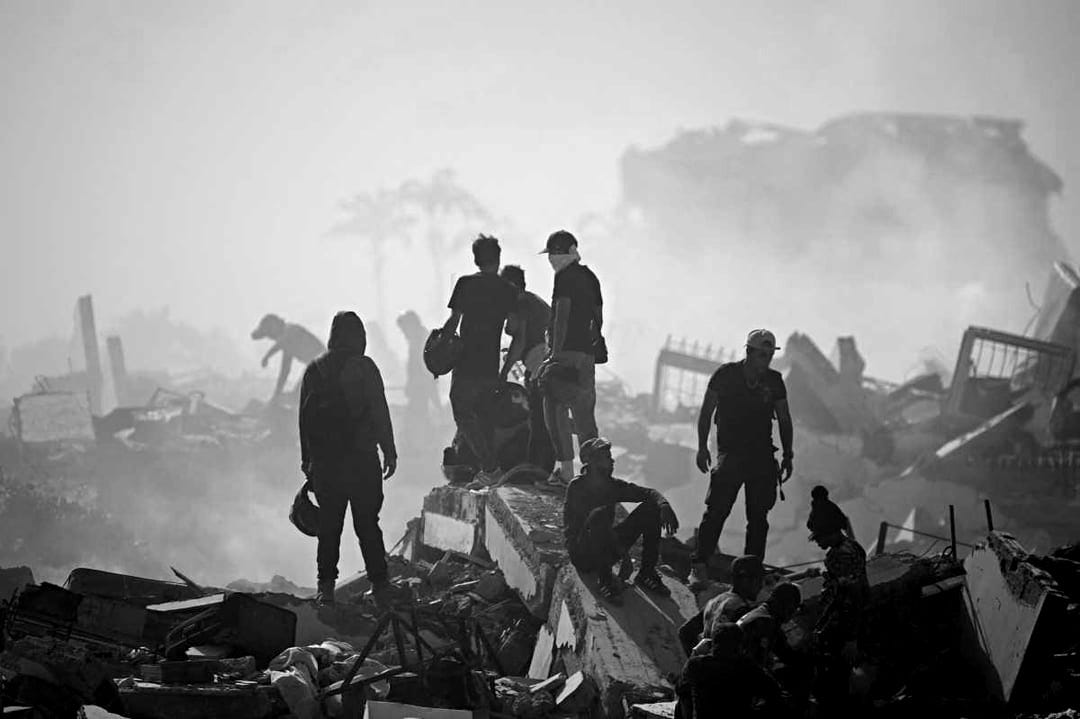
In 1999 I watched a man buried up to his chest. While the rescue workers tried to pull him from the mud, he refused to be rescued. He was still holding his two children by the hands. The mud that came down off the Ávila that December had hardened with them inside it. No one could help them. The coast that mud buried — La Guaira, Caraballeda, the towns of Vargas State — is the same coast the earthquake shook last week.
Google sent many in the area an alert on their phones seconds before the world came down on them. Hours late, the way exiles learn things, I too learned by phone that the world had come down back home. Venezuela hurts. At least my family was safe. The relief came to me dirty. A thousand strangers got no call. To stop my paralysis I went looking for Marcus Aurelius and he reminded me that, in no great while I will be no one and nowhere, and nothing that I now behold will be in existence, nor will anyone now alive. Reading him again returns me to order and duty. It is no consolation. From a desk in Maryland, to meditate is also a luxury, and I know it.
The mud of 1999 was also a beginning. That same December the rain lashed the country as it had not in half a century, while a referendum to approve the Constitution turned Hugo Chávez’s new philosophy into law, summed up in three words: “caudillo, army, people.”
A politically militant army moved into Vargas — to keep order, it was said — and the country discovered in real time the operating model the revolution would impose. On Fidel Castro’s advice, Chávez ignored the appeal of his own advisers and refused the help that was arriving, the foreign help, the American above all. Venezuelans paid for that pride, that caudillo’s mistrust, in corpses. Some of the children who survived their parents were given up for adoption. Others were sold, or never heard from again. The reconstruction money arrived and vanished. The debt did not. Neither the region nor the country was ever the same. What accumulated year after year, alongside $240 billion in debt, was the lesson the country learned without anyone teaching it: that no one will come, that the help is a lie. Only the mistrust arrives intact.
The government did not learn from the catastrophe. Or it learned the opposite. In 1999 it used the mud to hide the dead, though we all knew they were there. In 2026 the state made itself invisible, but we all could feel the rot. While the neighbors broke the concrete with their hands, the army shut itself in its barracks. The invisibility and the decay did not go away. They only changed owners.
Presence is not a feeling: it is a schedule. And the schedule puts the army on the tarmac at Maiquetía, where more officers salute foreign planes than stand over the dead on the coast.
The rescuers with their dogs and tools flew in from seventeen countries. The army promised in 1999 to be the most generous arm of the revolution. So it brought hunger and handed out chicken to anyone who agreed to wear red. It developed expertise in internal repression and in crushing dissenting ideas.
In 2026 the revolution can do nothing without the empire’s friends, and it thanks Trump, Bukele, Abinader, Noboa — even a mission from Israel — for the same ships and planes it forced to turn back in 1999. This is not repentance. It is the same instinct in a new disguise: the pride of then is the gratitude of now. The arithmetic underneath has never moved. The army stays indoors in both cases. The people dig in both cases. And some of the aid the world is sending will pass through the same hands that emptied the country, and part of it will not arrive.
From that mud comes this dust, de aquellos lodos vienen estos polvos. The chapter that began in that mud, with a Constitution and soldiers in Vargas, ends in rubble, with a tyrant in a cell and a toll of the dead that no one has finished counting. The mud that never moved has hardened into the state.
The dead will be counted. Then the living will mourn. If they refuse to be counted and mourned as victims and nothing more. This time, they will not wait for the state.
Powerfully written.....