


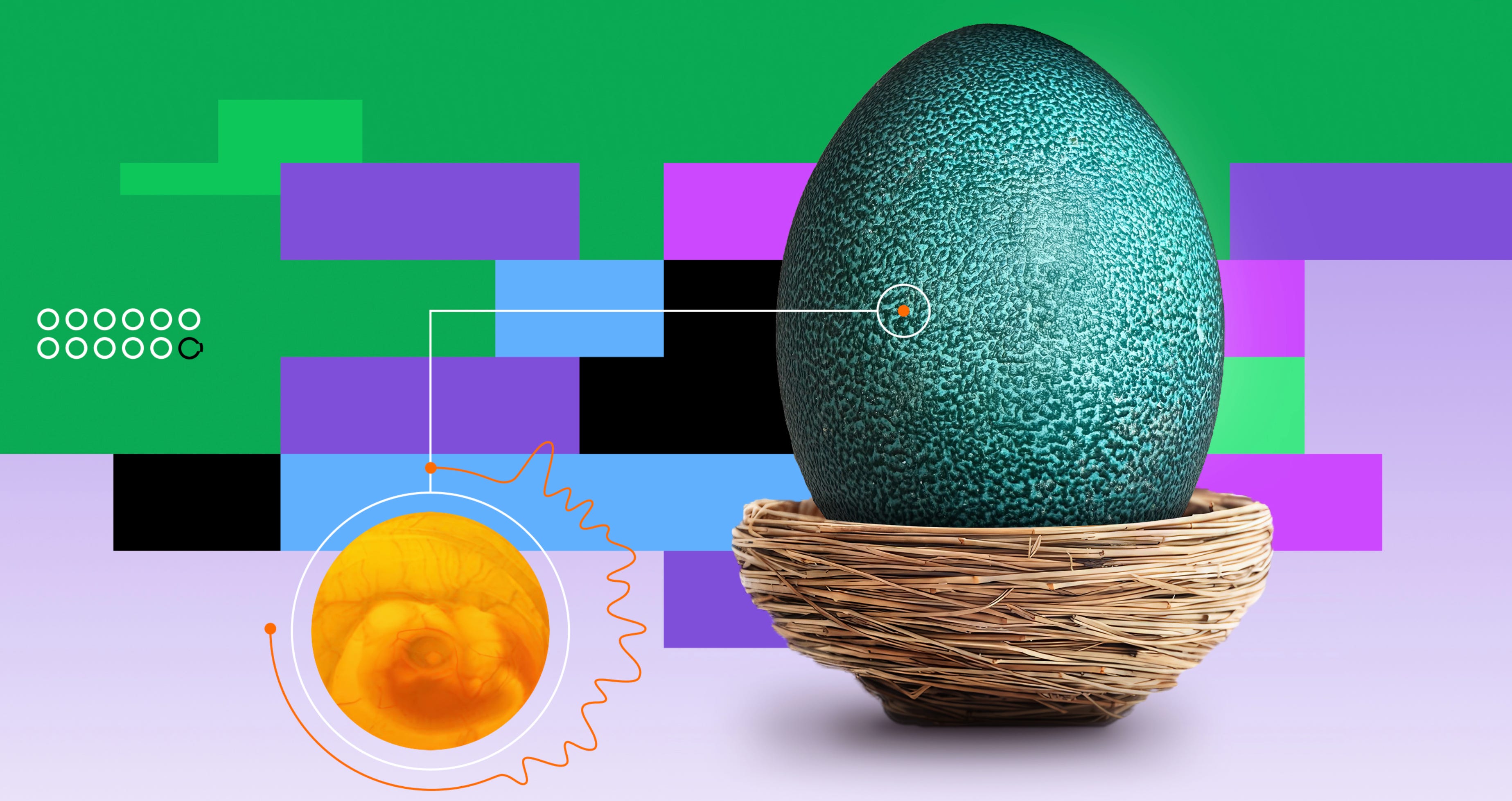
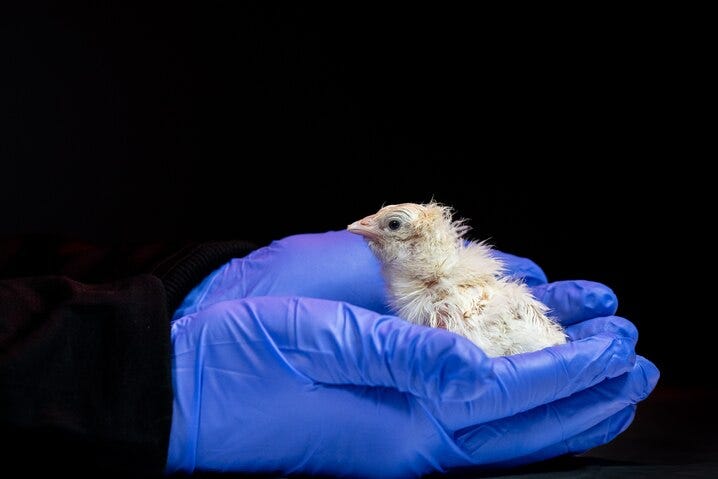
A silicone membrane, very thin, housed inside a rigid hexagonal cup. The first artificial egg. It lets oxygen pass through and holds in the moisture the embryo needs. A small window at the top lets the scientist watch the chick develop. The cup can be made smaller than a hummingbird’s egg or larger than a soccer ball. This month, twenty-six chicks hatched from it in Dallas. The company that built it announced the result on May 19, without a peer-reviewed paper and without disclosing the hatch rate.
Colossal Biosciences calls this a first step toward bringing back the dodo and the South Island giant moa. It is an attractive promise. The membrane is real. The chicks are real. What the company has not yet built is the bird.
The process, as the company’s polished video shows, begins with a real hen laying a real egg. Within the next twenty-four to forty-eight hours, a scientist cracks the shell and pours the contents — minus the shell, of course — into the artificial structure. Up to that point, everything is still biology: fertilization, laying, the first cell divisions. The engineering takes over only after the animal has done what the technology cannot.
The pattern is worth recognizing. Earlier conservation technologies arrived the same way: a precise biotechnical tool that solves the downstream problem and depends on an upstream world it cannot replace. The California condor was removed from the sky in 1987; the last twenty-two birds captured for captive breeding. The program worked. Condors fly again over the Grand Canyon and the mountains of Baja California. What the program could not return to them was a sky without the lead bullets of hunting ammunition, which still poison them.
The technology solved the downstream problem. The landscape that drove the bird to the edge of extinction is still the landscape the bird was returned to.
The artificial egg is the latest update of the same operation. Hours after last year’s dire wolf announcement, Interior Secretary Doug Burgum invoked the possibility of de-extinction in a post questioning the Endangered Species Act. “It’s time to fundamentally change how we think about species conservation.” The membrane had not yet been built. The post did not need it to have been built. The promise was enough.
This is the second movement of a sequence that is beginning to take shape. The catalog records what has been lost. The receipt becomes a form of consolation. The artificial egg promises to return something, and the promise becomes a permit. The more elaborate the engineering of resurrection, the wider the room granted for present harm. Each act of consolation works the same way: scientists, with great care, produce an object, and politicians use it for ends its makers did not propose.
Stuart Pimm, the Duke ecologist, named the substitution without ornament. Building windows. Outdoor cats. The artificial egg costs hundreds of millions of dollars, a Texas headquarters, and years of patents to come.
A closed blind costs nothing. A cat kept indoors costs less. The science that would save the birds that still exist is the science nobody is choosing.
Beneath all this, there is a smaller and closer truth. The birds that survive survive because of municipal ordinances, neighborhood gardens, tribal climate plans, and county-level building codes. Vienna’s housing. Copenhagen’s rain tunnels. The billion-dollar fund Portland raised through a retail tax. The coalition of Utah cities building renewables together. None of this required a silicone membrane or a ten-billion-dollar valuation. The work happens at the scale at which a place can still recognize itself as a place.
The chick that hatches from the artificial egg will hatch into a world that no longer contains the bird it was meant to be. No longer will we need to ask which came first, the chicken or the egg. They both needed a third thing first: a place to exist.
The Political Economy of Consolation
1 307 Billion Years • 2 The License • 4 The Price


