


To my father, who gave me the sea.
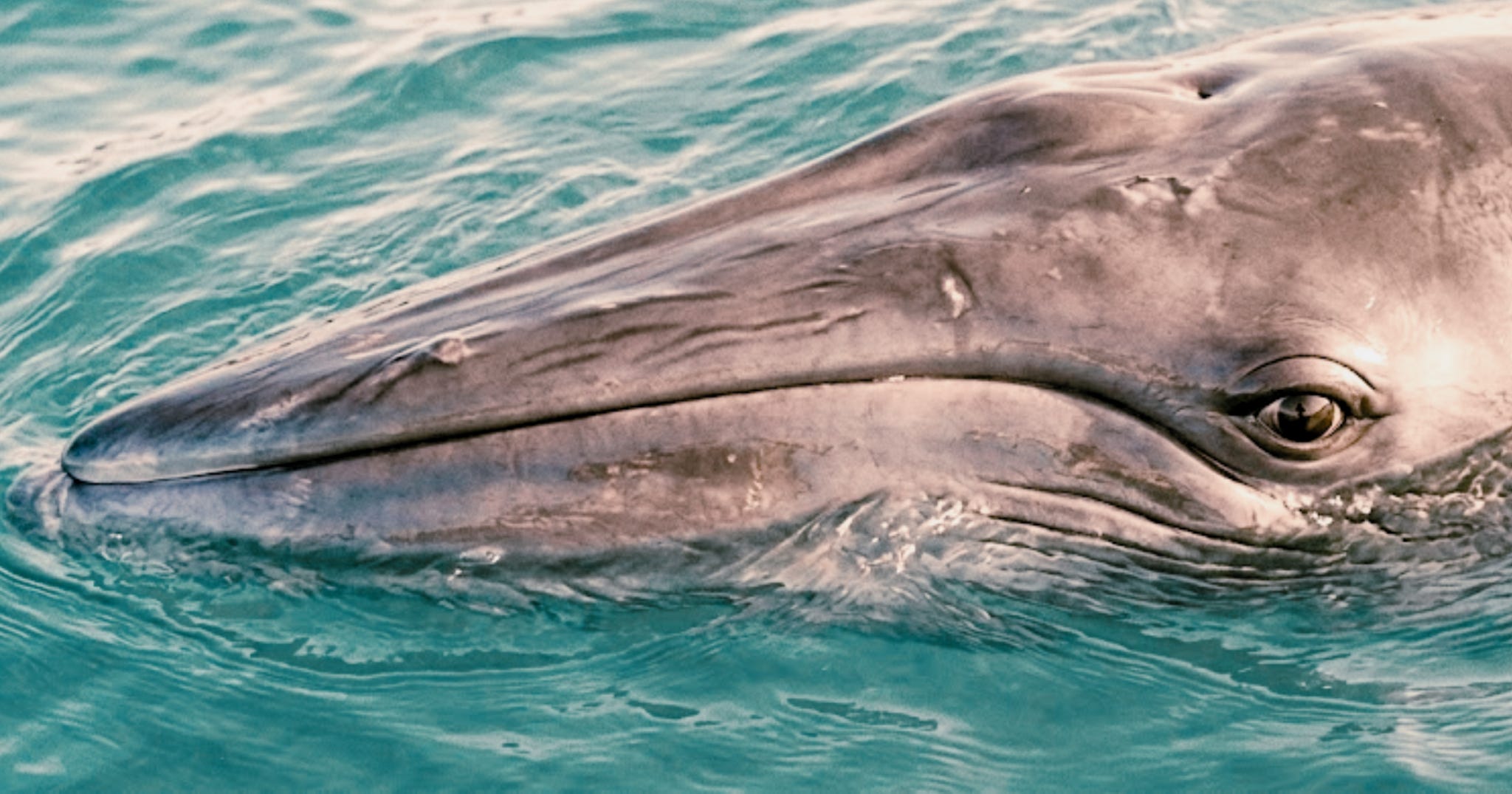
I was nine years old and the boat had drifted to a stop in the middle of the blue waters of the Gulf of Cariaco, off the coast of Sucre. Summer vacation, a family outing, the engine silent, the water still. Then the whale came. We didn’t see it coming; we saw it arrive. It lifted its head beside the boat, out of curiosity, and looked at us—looked at me—directly. The memory is blurred, as blurred as its eye must have been seeing us, small smudges on the surface. I don’t know how long it lasted. The connection will be eternal. In memory it lasts still.
Those same days, another giant was crossing the Venezuelan shores. Jacques Cousteau had arrived with the Calypso, his research ship, to explore the waters of the Cariaco. My father would take me to meet him at the port of Cumaná. It was there that I dreamed of growing up to be a marine biologist. I learned to love the sea, to sail and to dive. The rest is history. I became a journalist.
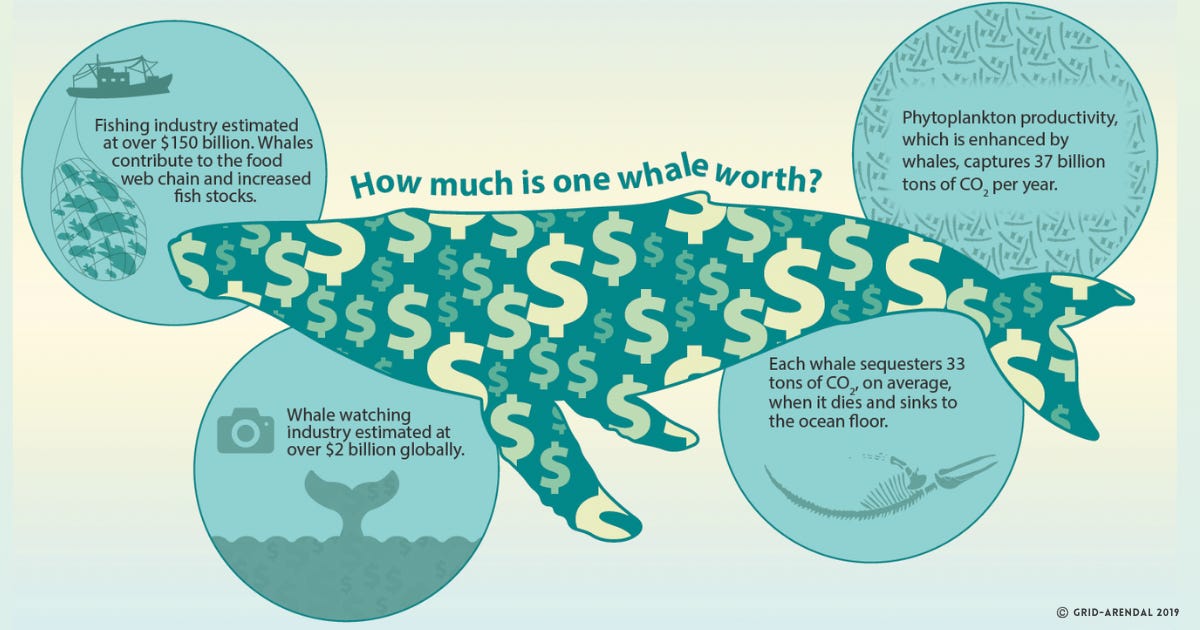
In 2019, a group of economists at the International Monetary Fund calculated how much a whale is worth. Ralph Chami, Thomas Cosimano, Connel Fullenkamp, and Sena Oztosun published the figure in the Fund’s magazine: more than two million dollars for each great whale, more than a trillion for all those still alive. The method added up the carbon a whale sequesters in its body over a lifetime—33 tons of CO₂, against the four and a half a car emits in a year—, the tourism it generates, the nutrients its waste delivers to the phytoplankton that captures still more carbon. Restoring the populations to their pre-whaling numbers would cost, they calculated, around thirteen dollars per person per year. Chami said it without hedging: he had handed conservationists a weapons-grade talking point. Dollar figures persuade governments where the beauty of an animal fails.
We had to put a price on the gaze from the Gulf of Cariaco for it to matter.
The science behind the figure is honest, above all in what it does not claim. The trillion dollars rests on the assumption that whales, restored, would raise the productivity of global phytoplankton by one to 2%. There is no empirical evidence for that assumption; the authors do not justify it. When you discount to the part that can actually be measured—the carbon a whale carries to the bottom of the sea when it dies and sinks—the number collapses.
Hannah Ritchie did the arithmetic: even restoring whales to their pre-whaling populations, that sequestration would amount to between 6/10,000 and 4/10,000 of 1% of global emissions. Barely a dent. A group of biologists wrote it last year in Nature Climate Change, using a phrase that names the procedure: the carbonization of animals as a climate solution. Inflated valuations, selective reporting, and a narrow focus on carbon that distracts from the only thing that reduces emissions, which is reducing emissions and our dependence on fossil fuels.
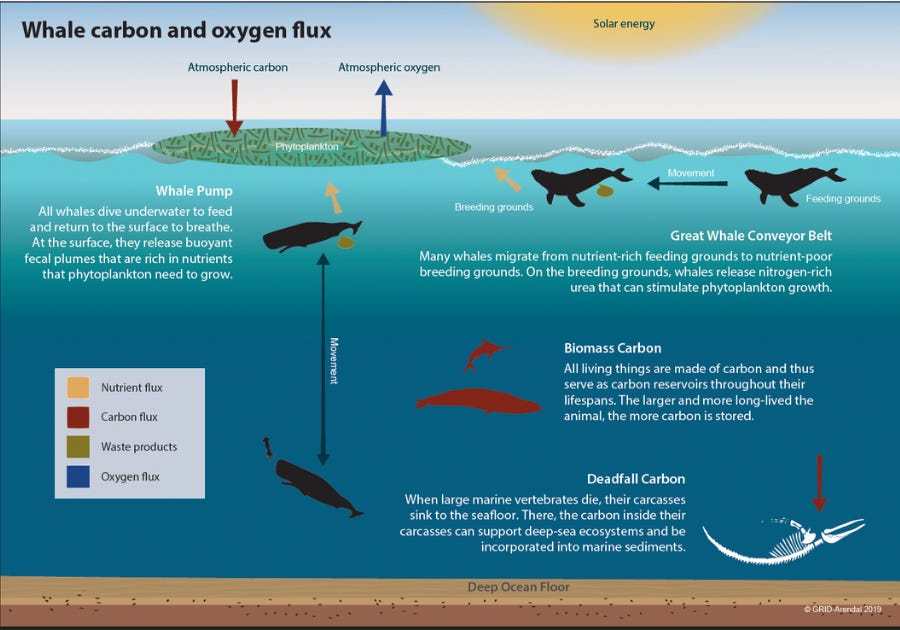
The scientists saw what was coming. A natural solution, valued and monetized, becomes the promise that the ocean will absorb what we do not stop emitting. The blue carbon credit market already exists and is growing toward the tens of billions. The infrastructure to sell the living whale is built. It will not be long before someone sells it. And when someone buys a whale’s carbon in order to keep burning their own, the whale will have passed from creature to permit.
We put a price on it to save it, the way a price is put on a hostage. The price becomes a license not to save the rest.
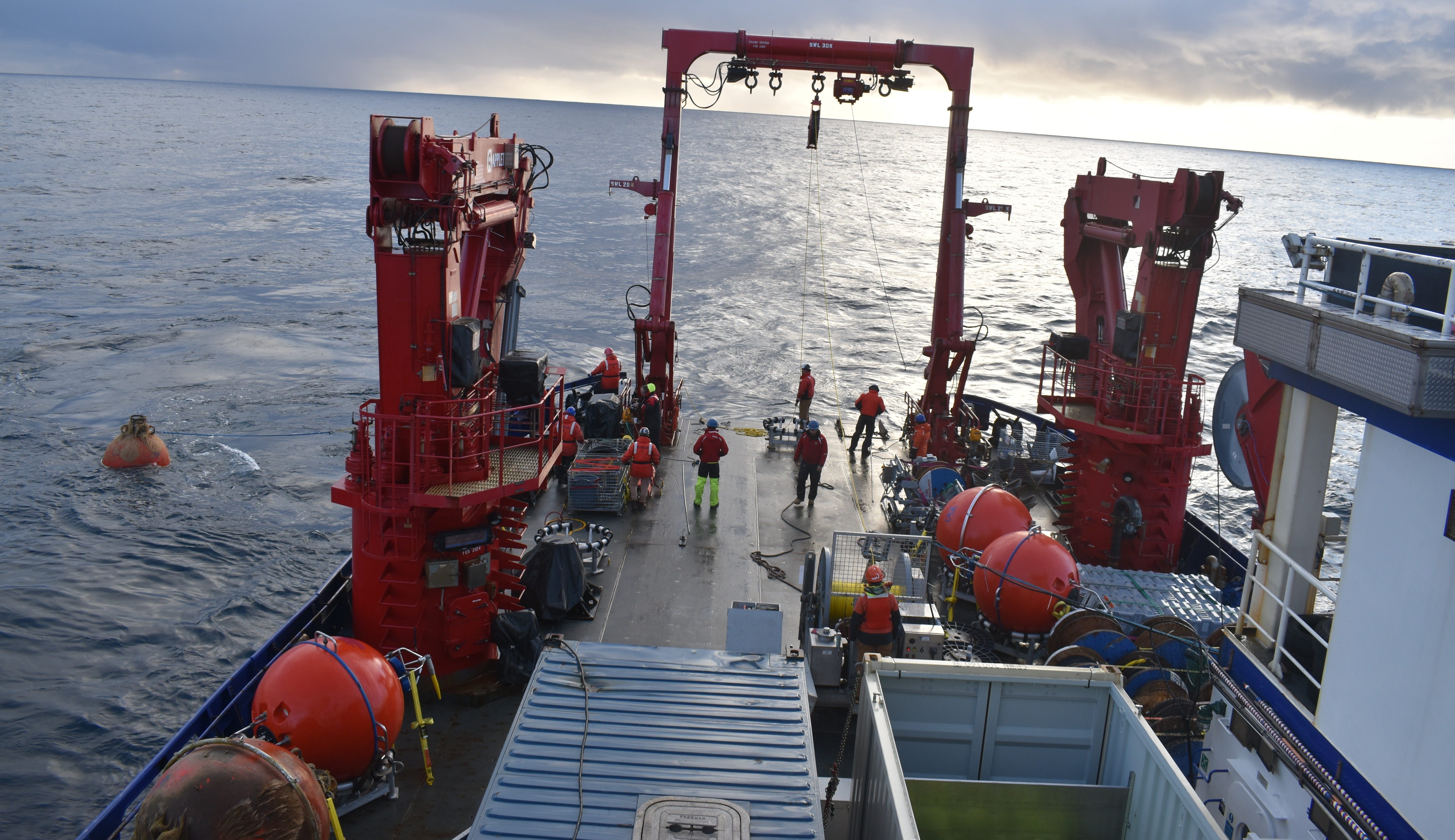
This month, as I write, the Trump administration has begun to dismantle the Ocean Observatories Initiative, a US$368 million system installed a decade ago to watch the deep. This June, the ships set out to retrieve more than 900 instruments anchored off Oregon, Washington, Alaska, North Carolina, and the Irminger Sea, between Greenland and Iceland.
Those instruments measured, among other things, how the ocean absorbs greenhouse gases from the atmosphere. The Irminger station tracked the Atlantic overturning current, the conveyor belt whose weakening would be a climate catastrophe. Hilary Palevsky, of Boston College, had spent a decade using that data to understand exactly how much carbon the sea absorbs. They are the devices that will now be torn from the bottom.
The consolation says the ocean will save us by capturing the carbon we emit. The same hand that might collect on that consolation switches off the eyes that watched whether it was true. There is no need for measured carbon once you have decided not to measure it. Congress had twice restored the budget—US$48 million a year, a small sum against the worth of what it measured—and twice the administration tried to shut it down. It is the same gesture as the climate laboratory in Colorado, the same as the scenario whose retirement was celebrated: to dismantle not the truth, but the capacity to verify it.
And meanwhile, we kill the whales worth a trillion. This year, the 40th anniversary of the moratorium that, in 1986, saved them from disappearing, Norway raised its minke whale hunting quota to 1,641, the highest in years, on the argument that the population has recovered. The recovery is the success of a conservation victory and is offered as the reason to undo it. Its own scientists published in 2025 that living whales fertilize the sea and raise its productivity by as much as 10%. The government raised the quota anyway, wrapped in the language of sustainability. The dead whale is worth something as an assertion of sovereignty by an industry almost no one needs anymore.
Norway’s entire catch for a year is worth, on the market, two or three million dollars—what the Monetary Fund calculates a single living whale is worth. And even so, the industry loses money: it is sustained by subsidies and by campaigns aimed at tourists, to eat meat that humans do not much like and that ends up as dog food. The dead whale is not worth even what it costs to kill it.
This is the fourth case I have examined in a series I call the political economy of consolation, and it’s worth clarifying what the pattern is and what it is not.
Four times, the same thing: a catalogue, an egg, a curve, a price. Each time, an honest piece of scientific work enters the world, and power digests it and returns it, often as permission to dismantle a protection or to evade one that does not yet exist. It’s a more refined strategy than crude denialism.
The framework can’t explain everything. There are areas where there’s no prior victory to overturn, and in those places, the mechanism changes shape and requires a different inquiry. But where a victory exists to defend, the consolation learns to use it against itself.
The whale in the Gulf of Cariaco lifted its head to look at us without knowing that one day it would be worth two million dollars. I looked at it without knowing I would grow up to see how a price had to be put on that gaze in order to defend it, and how the price would become, too, another way of taking it.
It did not need to be worth anything to deserve the sea. The price we put on it ourselves. And the instruments that were going to tell us whether the price was true are about to come out of the water.
1 - 307 Billion Years • 2 - The Promise • 3 - The License


