


Leelo en Español
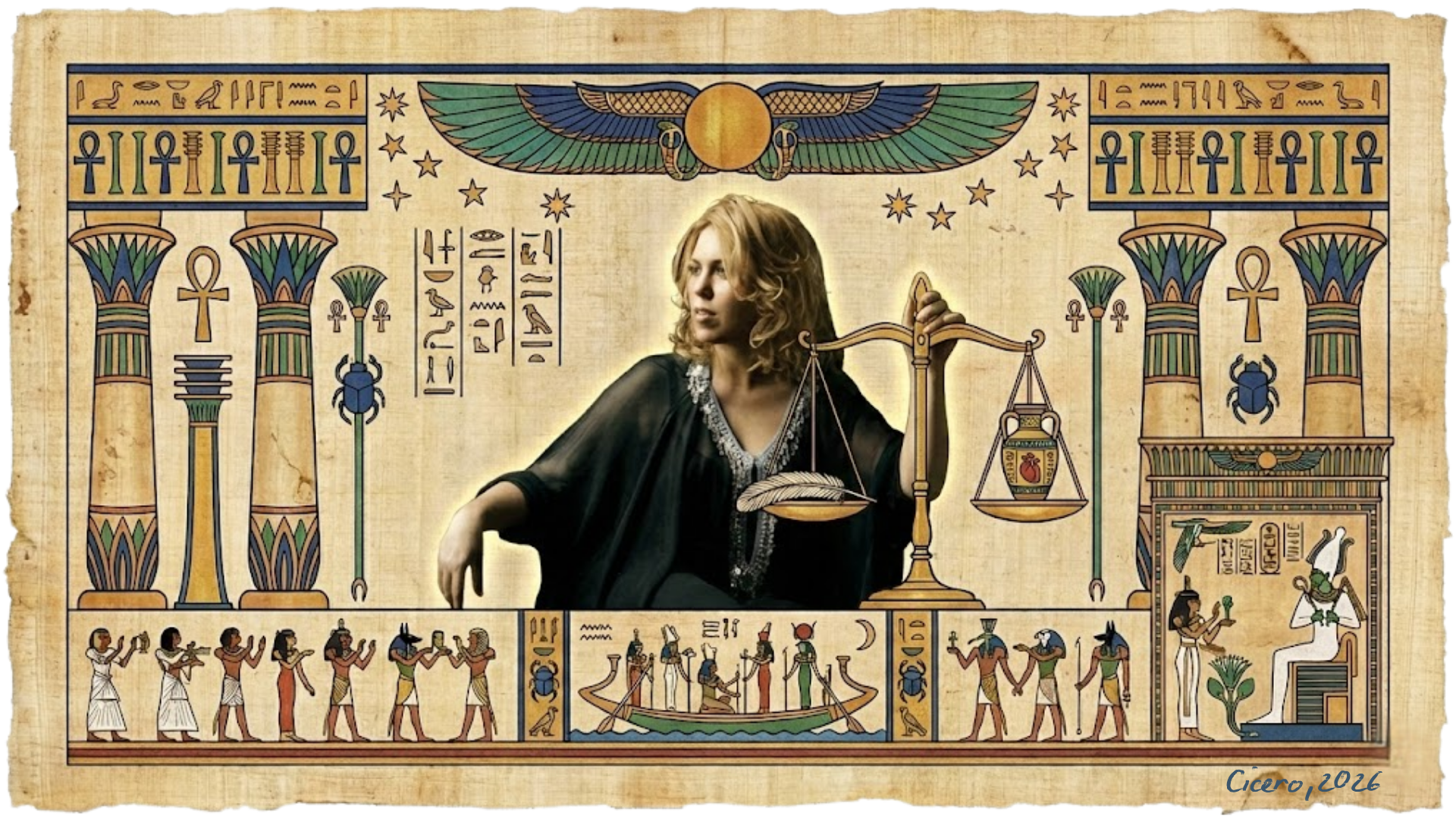
My friend and spiritual mentor, Abhi Janamanchi, recently reminded me of a scene from the Egyptian Book of the Dead. In the Hall of Truth, the god Osiris weighs your heart against a single feather. It is a terrifyingly simple audit. You aren’t asked for your professional pedigree, your tax bracket, or your party affiliation. You are asked two questions: “Did you find joy? And did you bring joy?”
In our current era—a period defined by the rapid-fire exhaustion of the 24-hour news cycle—these questions feel less like ancient mythology and more like a radical survival guide. We live in a time where discouragement is used as a deliberate tool of political control. If the powers that be can make you too tired to feel delight, they have already colonized your spirit. Joy, then, is not a luxury; it is the oxygen we breathe when the public square is filled with the carbon monoxide of demagoguery.
I often think about where this oxygen comes from. For my American friends, when I speak of home, there is often a phonetic stumble. They hear Minnesota, but I am saying Venezuela. It is a charming, if telling, misunderstanding: one name evokes a once stable, chilly heartland; the other, a tropical tragedy of lost democracy and broken promises. To live as a Venezuelan today is to carry a suitcase filled with ghosts—to keep explaining that your country is not a punchline or a geopolitical abstraction, but a bleeding wound.
This brings me to Gabriela Montero. To many, she is simply a genius—a pianist whose improvisations suggest a direct line to the divine. But to those of us who share her “Minnesota” accent, she is something more: a Ciceronian figure.
Marcus Tullius Cicero believed the ideal human was an orator-artist who synthesized deep philosophy with the lived example of their civic life. He famously noted that one only needs a library and a garden to live, yet he never sought the joy of writing in a vacuum. He retreated to his desk only when he was forcibly barred from the forum. To Cicero, a leader’s duty was to provide pleasure to the audience while simultaneously instructing them and stirring their emotions to protect the sanctity of the laws.
When I listen to Gabriela, I hear that Ciceronian spirit vibrating through the wires of her Steinway. She is a civic figure in the lineage of Arturo Toscanini, who refused to play for fascists, or Pablo Casals, who turned his cello into a cry for Catalan freedom. Gabriela refuses to let her art be a silent monastery. She understands that in a politically polluted world, the piano is not a place to hide—it is a podium.
There is, of course, a “Sanctuary Defense.” Many critics—and indeed many musicians—argue that music should be a pure space, a high-walled garden free from the “clutter” of the news cycle. They suggest that a musician’s only duty is to the score, and that by speaking out against the destruction of liberal democracy, an artist risks a banal distraction.
Historically, this has been the favorite argument of tyrants: Stay in your lane. Play your scales. Leave the governance to us. It is the argument used to domesticate the wild power of art. We see this play out in the tragic contrast between Montero and another celebrated Venezuelan, Gustavo Dudamel. While Gabriela has used her platform to denounce the regime that dismantled our country, Dudamel has often opted for a comfortable, state-sponsored silence, allowing El Sistema to be used as a propaganda machine. When art claims to be “apolitical” in the face of tyranny, it is not being neutral; it is being complicit.
And being a witness carries a psychological toll—especially when your adoptive home begins to echo the fractures of your birthplace. Montero recently described a moral bind: the relief of seeing international justice finally move against the Venezuelan regime’s “monsters,” paired with the horror of watching abuses of power unfold in the United States. It is a dizzying paradox. How do you take hope from the hand that offers a glimmer of accountability for your homeland while recoiling from the same hand when it strikes at civility in your own backyard?
“I feel the space where listening and caring happens is becoming increasingly suffocated,” she wrote on Facebook. This is the exhaustion I spoke of—the sense that we are being squeezed between two different brands of darkness.
This is exactly where the “Resistance of Joy” becomes essential. If we allow the bitterness of the struggle to extinguish our capacity for awe, the tyrants have won without firing a shot. Resistance is not just shouting into the wind; it is the refusal to become as cold and hard as the systems we oppose.
What if the “distraction” of standing for what is right is actually the core of the work? Bishop Desmond Tutu called joy our “birthright.” When we lose it, we shrink. To be in awe of a perfectly executed concerto while remaining deaf to injustice is not “purity”—it is sensory deprivation. True joy is found in the tension. It is the ability to hold the beauty of the music and the weight of the struggle in the same two hands.
When we finally stand before the scales of Osiris, the answer cannot be that we were merely happy when the sun was out or that we kept our art “clean” by keeping our mouths shut. The answer must be that even in the midst of loss, we found the rightness of living. We found joy in the music, and we shared that joy by refusing to be silent.
The feather is light, and our hearts must be equally unburdened—not by ignorance, but by the courage of having stood for the light.
The immigrant’s greatest burden is not the suitcase, but the translation of a tragedy into a dinner-party anecdote.
When I say "Venezuela" and my neighbor hears "Minnesota," it is more than a phonetic slip. It is a map being folded the wrong way. One is a state of lakes from a nation that wants no kings; the other is a state of longing for a nation kidnapped. To live in the diaspora is to carry a country that no longer exists on any official map, trying to explain to a comfortable world that your "accent" is actually the sound of a house falling down in slow motion.
To be neutral in the presence of a fire is to be on the side of the ashes.
There is a persistent myth that the artist must live in a "silent monastery," untainted by the soot of the street. They say the piano is a sanctuary. They are wrong. A sanctuary is where you go to be safe; a podium is where you go to be heard. To play Bach while the city burns and claim "neutrality" is not an aesthetic choice—it is a form of decorative cowardice. If your art doesn't tremble when the world shakes, you aren't a creator; you are a taxidermist of sound.