


Leer en Español
(Leelo en español)
At three in the morning, in my Washington, D.C. apartment, the blue light of a phone illuminates my face with the spectral intensity of a lighthouse in the fog. It is the glow of an insomnia shared by millions. On the other side of the screen—more than two thousand kilometers away—in the sticky darkness of Maracaibo or the electric silence of Caracas, there are no answers: only the drone of uncertainty.
Two weeks have passed since Operation Absolute Resolve, and the air still smells of old gunpowder and reheated coffee: that unmistakable blend of adrenaline dissipating to make way for history’s hangover.
For years, the Venezuelan diaspora has mentally rehearsed its return as one reviews a sacred liturgy. Today, it stands paralyzed on the threshold. The initial euphoria—that cheap champagne of hope—has evaporated. What remains is the anxiety of memory. And in Latin America, memory is not a file cabinet: it is a string of open wounds.
The military boot is the opening bar to several songs this region knows by heart. The lyrics change depending on whether the sole is domestic or foreign, but the refrain prevails. It matters little the flag or the technical euphemism—Operation Resolve, “stabilization operation,” or “Trumpetilla“ (a blowing of a raspberry) in the slang of the cynics: the martial step wakes ghosts that were sleeping with one eye open.
Resuelve! In Venezuela, moreover, the name sounds neither like determination, nor decisive feat, nor definitive closure. In the popular ear, “Operation Absolute Resolve“ morphs into “Misión Resuelve Como Puedas“ (Mission Resolve-It-As-You-Can): a daily expression connecting recent memories of Chavista handouts with a verb that tyrannizes everyday life. To resolve does not mean “fixing the country”; it means “securing the daily bread.” It means obtaining hard currency by any means necessary—a fixed job, a freelance gig, a side hustle, a remittance—to fill the stomach today and navigate inflation. Viewed from the outside, the operation’s title promises a denouement; viewed from the inside, it describes the national trade of living hand-to-mouth, where the future is conjugated in the imperfect past.
Here lies the supreme irony, worthy of a Greek tragedy rewritten by a Washington consultant: to apply the law, it was decided to ignore the law. The United Nations Charter, with its noble prohibitions on the use of force and non-intervention, is reduced to diplomatic origami: crisp, fragile, and irrelevant in the face of Realpolitik. Thucydides already stated it in the Melian Dialogue: “the strong do what they can and the weak suffer what they must.” Washington rolled the dice; International Humanitarian Law watches from the bleachers, concerned less by the habitual slowness of due process than by the exceptional speed with which its own authority dissolves.
But it would be a mistake to view this solely through 20th-century lenses. This is not the Cold War, even if temperatures have dropped in Moscow and Beijing. There are deeper structures at play: what happens in Miraflores Palace produces aftershocks in the Taiwan Strait and on the steppes of Ukraine. Xi Jinping and Vladimir Putin do not see a “liberation”; they see a precedent. They see, with surgical precision, just how far the hegemon is willing to go against a hostile regime. For them, Operation Absolute Resolve is not a moral narrative: it is a data point in the algorithm of their survival and expansion.
The question—the only one that matters—is not rhetorical: Does this function as deterrence? Or does it open the door for every power to do as it pleases in its own backyard? Is it a surgical strike or the fuel for global escalation?
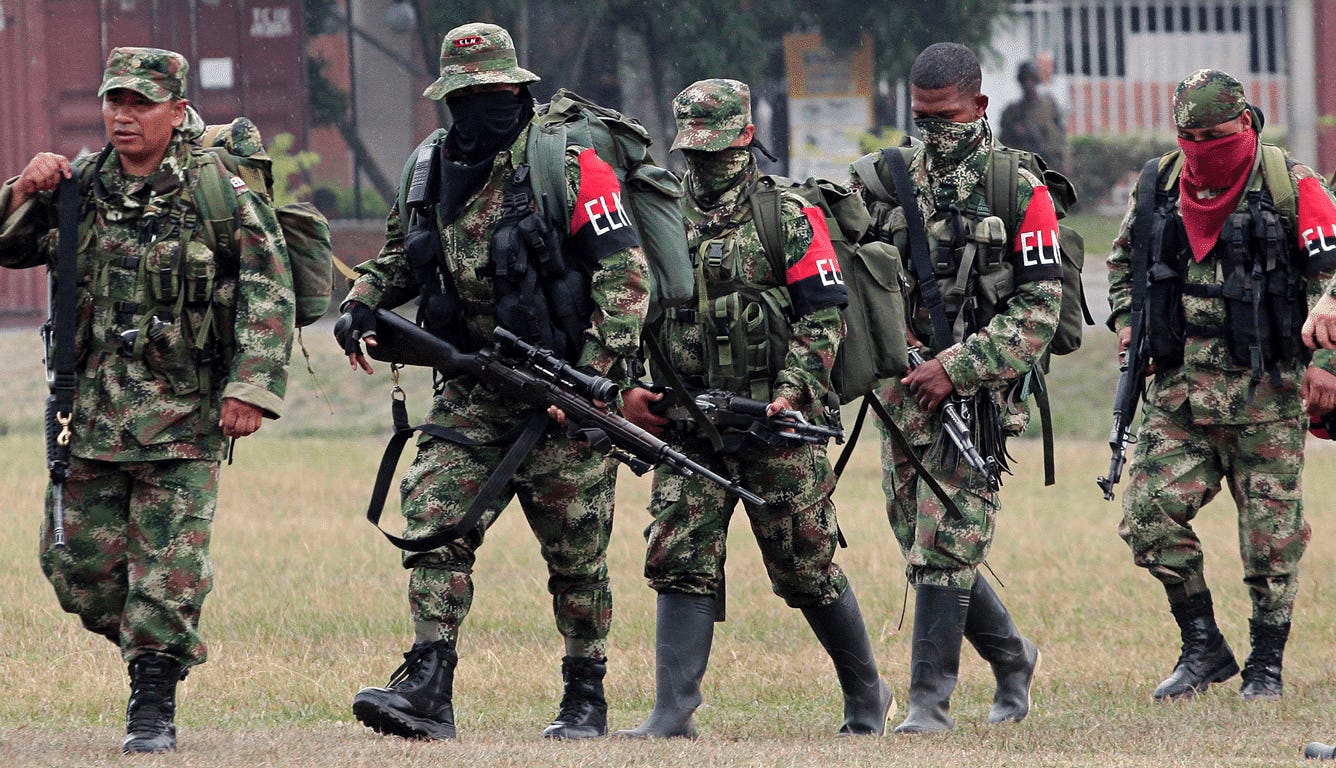
Let us descend from the geopolitical stratosphere to the mud of the borderlands. While headlines debate legitimacies, on the line between Colombia and Venezuela, reality has other masters. The power vacuum is a physical myth; in politics, a vacuum does not exist. The same ruffians control power and the armed forces today. Where the State retreats or collapses, organized crime blooms with the virulence of a tropical vine. The ELN, transnational gangs, and the archipelago of armed groups operating in the country do not read press releases: they read market opportunities.
Since before Maduro even imagined becoming president—when Chávez was still the supreme commander—these irregular forces were occupying spaces. During the extended decade of Madurista terror, they reconfigured routes, ports, illegal crossings, and chains of command. And now, under Trump or under a transitional government, they will ensure something elemental: that, whoever sits in the presidential chair, they continue collecting the toll. The uniform changes, not the tax. And the client remains the same: the legal merchant, the gold smuggler, the drug trafficker, or the family of the kidnapped.
And you could read The Leopard too. In the center of this hurricane—static only in appearance—Venezuelan domestic politics interprets a macabre version of the Italian novel. Tancredi said it with a lucidity that today sounds like a threat: “If we want everything to stay as it is, everything needs to change.” María Corina Machado, in an aggressive diplomatic campaign to preserve her legitimate relevance, acts against the backdrop of this Gattopardian landscape. She now knows that giving away the Nobel was a mistake born of desperation. The opposition unity, which seemed solid around her leadership, is beginning to show cracks: fatigue, opportunism, survival calculus. The “interim” or “acting” government runs the risk of becoming a pillar of salt: paralyzed in the name of stability, bureaucratizing change, freezing the urgency.
Meanwhile, political repression—no longer centralized and “efficient,” but more fragmented, more unpredictable—continues to nip at the heels of dissent. In a regime losing vertical control, violence rarely disappears: it decentralizes.
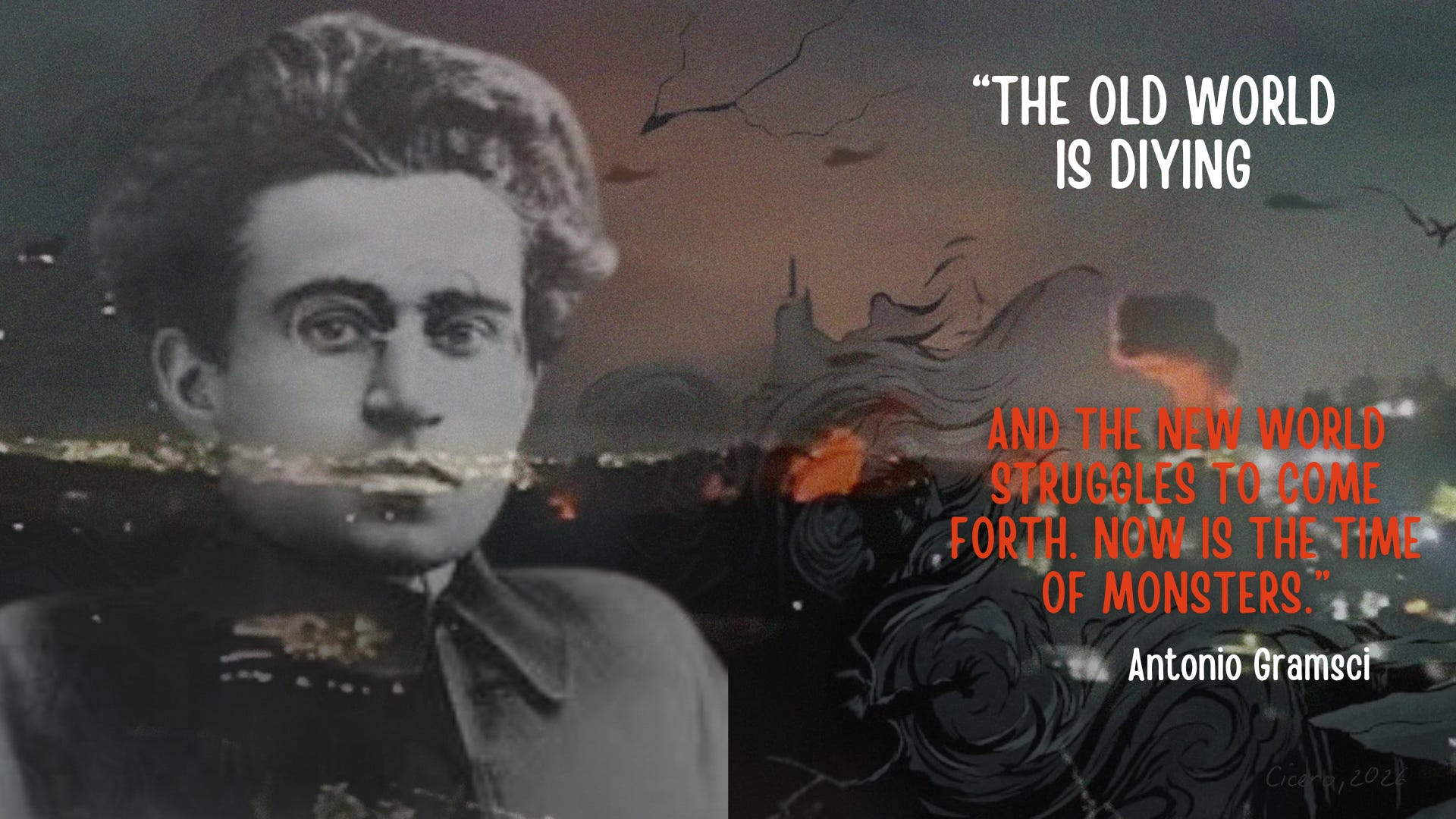
We are in the chiaroscuro of the interregnum, as Antonio Gramsci would say. The old world has been struck dead, but the new one refuses to be born. And in that twilight space, monsters emerge: not always with fangs, but sometimes with forms, improvised chains of command, and private security contracts.
The window for a rules-based transition is closing, not with a sharp slam, but with the rusty screech of internal inaction and the unrepeatable spectacle of Donald Trump’s “Mission Accomplished.” If the transition does not become rapid, time-limited, and fiercely institutional, Operation Absolute Resolve will not be remembered as the day of liberation, but as the moment Venezuela exchanged a vertical tyranny for a tutored oligarchy and their horizontal anarchy: the reign of godfathers and commissars is a zombie country run by remote control, fed by family remittances and oil royalties administered from abroad.
And then, in Washington—as in Doral, Madrid, Bogotá, Lima...—the phone’s light will stay on at three in the morning, waiting for a message to confirm if it is time to pack bags or to close our eyes, finally, and forget

The persistence of the Chavista structure after Maduro’s capture suggests something worse than a miscalculation: it reveals a fundamental category error in Washington’s thinking.
In Americas Quarterly, Javier Corrales frames U.S. actions as a “Hostile Takeover and Abandonment”—a clever corporate analogy to decode Trump’s business-driven operating system. However, if we want to grasp the true nature of the tacit pact between Washington and Caracas, I suggest putting down The Wall Street Journal and picking up Mario Puzo’s The Godfather.
We are not witnessing a corporate collapse triggered by the removal of a CEO; we are watching an organized-crime ecosystem designed to survive decapitation. What is unfolding, to the dismay of the democratic opposition, is not a transition but a change of franchise: the brand shifts, the managers rotate, but the underlying machinery—coercion, rents, and territorial control—remains intact. Stability, in this model, is not institutional; it is transactional.
For two decades, the Venezuelan elite operated under a protection contract with Havana and Moscow, trading ideological alignment for intelligence and geopolitical shielding. But sanctions quietly eroded that pact by turning their wealth into dead capital, and the American armada in the Caribbean finally collapsed it. In this context, Trump’s arrival is read less as an invasion than as a hostile—yet enticing—tender offer. What Washington offers is not legitimacy, but liquidity. Loyalty shifts not because beliefs change, but because financial viability is restored.