


Leer en Español
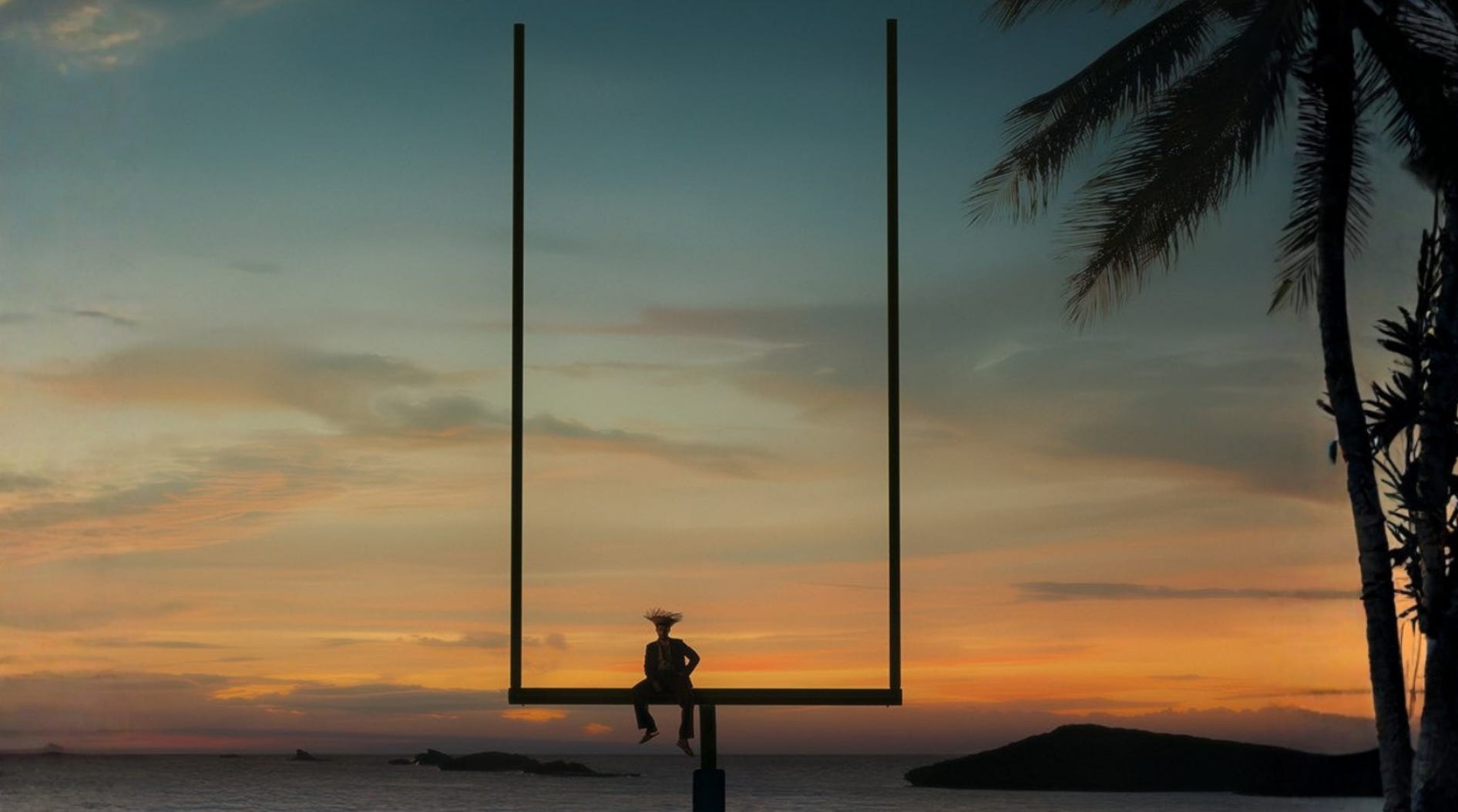
In the sweltering August heat of San Juan, Benito Antonio Martínez Ocasio once stepped onto a stage wearing a shearling hat. A winter crown in a tropical furnace. It was a small act of aesthetic disobedience—a man dressed for a climate that hadn’t arrived yet (and hopefully never will to Puerto Rico).
To those who know him, the name “Bad Bunny” was born from a scowling childhood photo of a boy forced into a rabbit costume. He has been performing defiance ever since. It is a familiar survival tactic: turning the costume they force upon you into a suit of armor, until you can no longer tell where the felt ends and the skin begins. How many times haven’t I pretended I chose my costume?
This Sunday night, at Super Bowl LX in Santa Clara, the climate finally changed.
To the bouncers, the custom agents of culture—those anxious census-takers of the American soul—this presence is “political,” a stain to be blotted out with a flyover and a prayer. But they are mistaking climate change for a mere change in the weather. When Debí Tirar Más Fotos took the 2026 Grammy for Album of the Year—the first all-Spanish work to do so—the institution wasn’t “embracing world music.” It was conceding what was already true: the imperial metropolis finally admitted that the provinces had stopped asking for permission to speak.
To confuse a shift in the tectonic plates with a change in the weather is the fatal error of a declining empire.
For the classicist that follow my columns, this is a Roman story. Cicero believed the Republic was a shared ethical craft, but he knew that when the language of the Forum shifts, the definition of a “person” shifts with it. American mainstream cultural institutions long treated Spanish as a guest room in the national house—a courtesy, a “foreign” luxury. But 19.8 billion streams in 2025 is not a guest list; it is a deed of ownership.
The irony is that Benito is no foreigner. Puerto Ricans have been citizens since 1917—American by law, yet perpetually “translated” by culture. When he stood at the Grammys and said, “We are humans and we are Americans,” he even gave the country its escape hatch: if we fight, he said, let it be with love—the kind strong enough to hold the line without becoming the thing it hates. He wasn’t reading a policy memo. Bad Bunny was issuing a modern Civis Romanus sum. He was reminding us that the Republic fails the moment it confuses the English language with the American virtue.

Predictably, the backlash arrived with the subtlety of a car crash. A rival “All-American” show was staged—a refuge for those who treat patriotism as an audio format. Through Kid Rock, they framed it as “David and Goliath,” a posture that reveals a frantic fear: the suspicion that joy, especially joy in Spanish, might be a form of takeover. They are fighting a culture war; Benito is revealing a census.
Look at the field. The NFL isn’t “going woke”; it is going where the blood is. While pundits argue over lyrics, scouts are obsessing over Fernando Mendoza, the Indiana quarterback projected as the No. 1 draft pick. Put the two images side by side: Mendoza under center, Benito under the lights. The “New America” is no longer a guest at the stadium. It is the stadium. It is the draft board, the playlist, and the heartbeat.
By locking the door against the future, you do not keep it out; you only succeed in imprisoning yourself in the past.
Does the machine commodify this rebellion? Always. The machine digests whatever makes the crowd feel alive. But it cannot monetize the erasure of a people. When Spanish fills the most televised ritual in American life, those told for generations to “soften” their names suddenly become unshrinkable.
Bad Bunny’s San Juan residency was titled No Me Quiero Ir de Aquí—“I don’t want to leave here.”
“Here” is no longer just an island. It is the contested space of the American identity itself. For some on the right, this is sort of a Rostach test. Those who see themselves as the true America would say: “We will watch the game but turn off the TV during the 12 minutes half-time.” Paradoxically, they would be doing the most un-American thing: refusing to see and accept those who look and sound different. By denying them entry to their imagined United States, they are opting to “self-deport” from the real one. We are being called to the hardest democratic art: to treat language not as a loyalty test, but as reality. To widen the circle without hardening the heart.
The Super Bowl was a mirror. Last Sunday night, it showed an America that can no longer pretend its own voice is “noise.” The stadium was in California. The music was Caribbean. The argument was Roman. For twelve minutes, the center of the world was wherever Benito decided to stand.