


Leer en Español
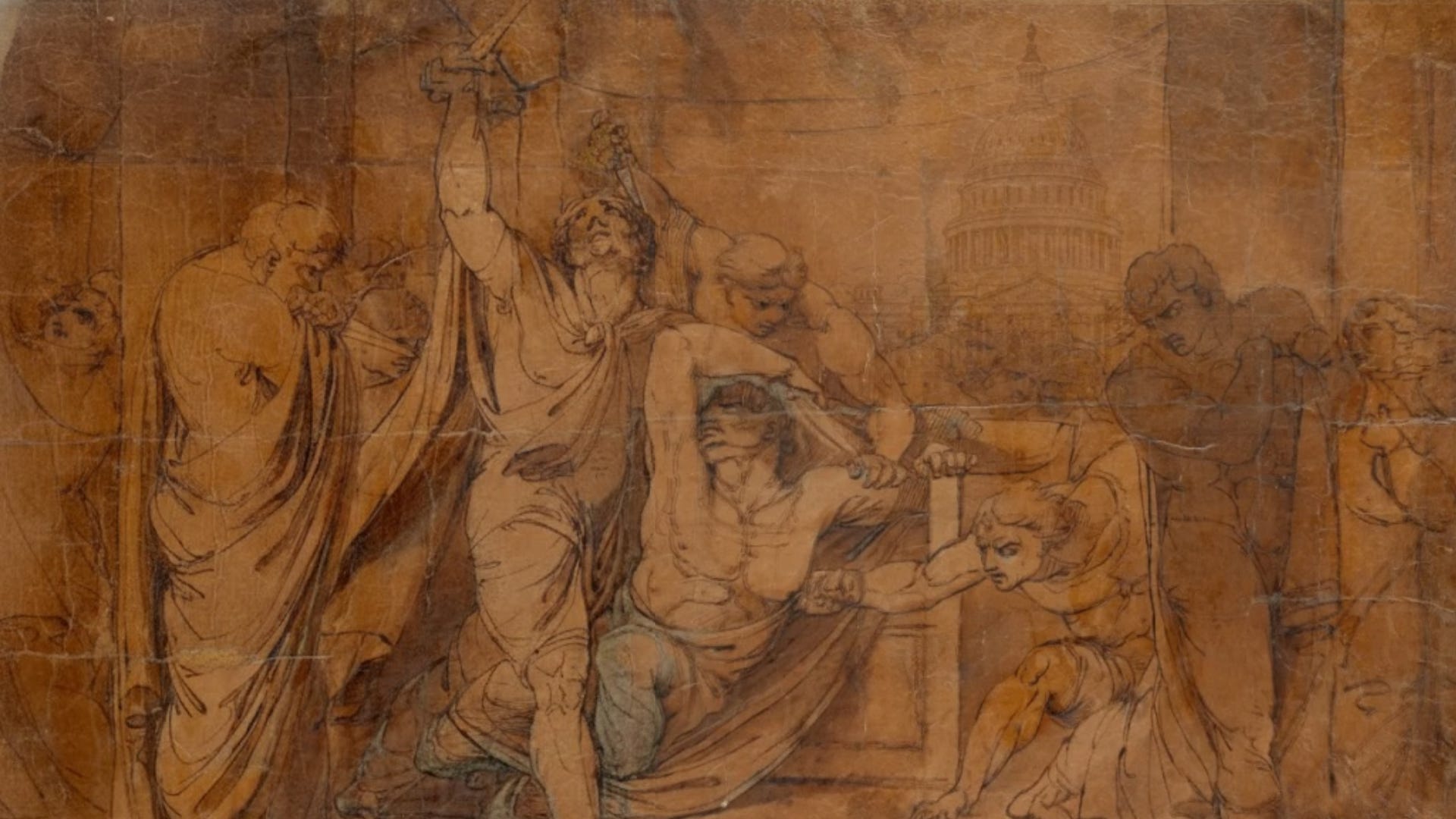
The weight of a ballot is negligible. A dry leaf of pulp, or a ghost-flicker of pixels on glass, it is no heavier than a sigh. We handle it with the casual indifference we reserve for grocery receipts or parking stubs. And yet, stand inside the antiseptic hum of a polling station and notice how that scrap of paper begins to feel like a load-bearing beam. You can almost hear the building creak when you lift your pen. It is dawning on you that the roof of the republic is not held aloft by divine decree or the inevitable march of progress. It is held up by us—our tired spines pressed against cold marble, our stubborn breath keeping the dust from settling.
We were raised on the myth of the safety net. We assumed that somewhere above the stage sat an invisible referee with a whistle, ensuring the “right side” would eventually win. But in the late sixteenth century, Shakespeare committed a terrifying act of artistic apostasy. He stepped away from the English histories—where crowns were sacred and God balanced the books—and walked into the echoing vacuum of Rome.
In his Julius Caesar1, the gods have gone on strike. There is no cosmic accounting, only the friction of human temperament. Here, we meet the archetypes that still haunt our comment sections. There is Brutus, the idealist who loves the idea of a republic more than the sweating, complex people who inhabit it. He seeks a single “necessary” act to cleanse the system, wanting clean hands while gripping a red knife. Opposite him is Caesar, the man of “alignment,” who confuses his own confidence with destiny. When a crowd begins to treat a leader’s ego as a North Star, the republic begins to lean.
A republic is the only structure where the inhabitant is also the load-bearing beam; the moment you tire of the weight and call it “liberty,” the roof becomes a guillotine.
Or put it another way
A republic is a cathedral built of breath; the moment we stop believing in the roof, the rain begins to fall.
Rome is not a city on a map; it is what happens when a society realizes the gods aren’t coming and tries to fill the silence with theater. Today, our “world on fire” is fueled by torches made of private resentments. We live in that shivering space Shakespeare described as being “between the acting of a dreadful thing / And the first motion.” It is the suspended second when you can still decide not to become what you claim to oppose—before you repost the lie, before you reduce a human being to a category, before you mistake cruelty for belonging.
A republic is not a fortress; it is a habit. It is a practiced skill, a set of disciplined motions repeated until they become muscle memory. Democracy is less the marble column than the carpenter’s joint: invisible when it holds, catastrophic when it fails. We treat it like a building we inherit, but it is more like an instrument. If you stop practicing scales, the piano does not punish you; it simply stops sounding like music.
In our century, interconnectedness is not the bridge we were promised; it is a fuse. The algorithm does not throw stones, but it hands them out—one to each citizen—labeling the carnage “engagement.” What looks like a political crisis is actually a collapse of the internal scaffolding of our imagination. We have learned to use the vulnerable—the migrant, the stranger, the “other”—as fodder for electoral theater. We turn human trauma into campaign footage, forgetting that a republic cannot keep its balance if it treats dehumanization as entertainment. Once you build a ramp for contempt, everyone eventually slides down it.
When we treat the suffering of others as the lighting for our own political stage, we are no longer citizens; we are merely spectators of our own collapse.
The conspirators in Rome washed their hands in blood to make murder look like sacrifice. We do our own handwashing with language, using words like “purge” or “cleanse” to launder our cruelty into “strategy.” Then comes Antony, the pragmatist, reminding us that if you treat the people as a weapon, you end with a country full of shrapnel.
Cynicism is the easy posture in a vacuum. It makes you feel intelligent without requiring courage. But the brave path is the ordinary practice of three specific habits:
Recognition: Refusing to speak of humans as pests or numbers. Say child, say family. Language is the mortar.
Restraint: The ability to lose without lighting a match. The secret hero of democracy is the citizen who can feel wronged and still refuse to humiliate back.
Attention: Slowing down in the second before the “first motion.” The algorithm thrives on reflex; a free citizen is someone who can pause.
None of this is sentimental. It is structural engineering. If there is no invisible referee, the ethical calculus is yours alone. The roof stays up only as long as enough of us rehearse the human gestures that hold it: the honest count, the reluctant concession, the refusal to make spectacle out of suffering.
We are the architects of the void. History is not a book written by the dead; it is a conversation we are currently having with the silence—the silence of a world that offers no guarantees. And whether the roof holds is answered, quietly, in the habits you practice when no one is applauding.
Note: History is not a fatal destiny, but a sum of wills. If the insights of historians like Niall Ferguson teach us anything, it is that order is a precious anomaly, not a guarantee. As you finish these lines, the invitation is simple yet demanding: become the guardian of your own conduct. In a world seeking to ignite itself with labels, the most revolutionary act is to continue calling things—and people—by their true names. The void is not filled with noise, but with the solidity of an integrity that requires no applause to hold up the roof.
I wrote this piece inspired by the brilliant essay The Matter of Rome by The Rustbelt Reader, a Substack recommended by historian Niall Ferguson.