


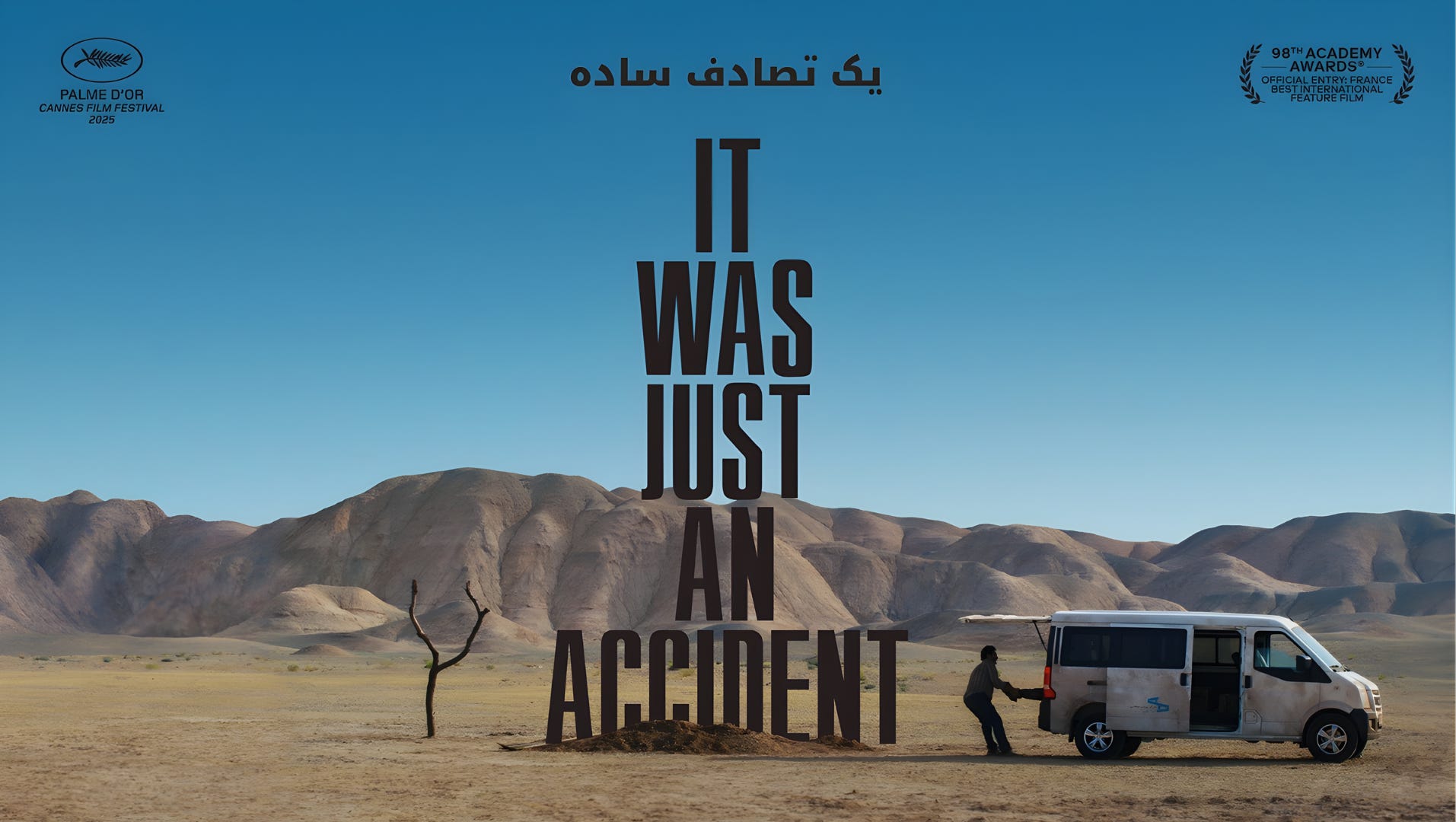
A movie theater or a streaming platform is a strange kind of border. A screener link for movie reviewers is even stranger: a password, a time-limited window, the blue glow of a laptop in a hotel room that smells faintly of detergent and stale coffee.
Somewhere a film loads; elsewhere, sirens do. The West “meets” a country it cannot easily enter not through an embassy gate or a correspondent’s notebook, but through a temporary portal—an image that expires, like a visa stamped in light. For many of us, the representation has become the only territory we are permitted to cross.
Here is the thesis I can’t shake: for decades, much of the world’s moral knowledge of Iran has traveled through cinema because cinema—under censorship—became a substitute public record. I also come from a place where the press is gagged, and learned this instinctively: truth migrates to other forms. It learns to live in images shaped like verses, photographs, graffiti, movies.
I recognize the instinct: when speech becomes evidence, art becomes the safer kind of testimony.
After 1979, the regime tried to police what could be seen—especially women’s bodies, love, ordinary intimacy—while imagining film as a controllable instrument. The result was not control but craft. Iranian filmmakers built a tradition of workaround: children, allegory, rural roads, conversations in cars. The camera learned to speak in parentheses. It learned to imply, to angle itself like a cautious witness in a hallway, recording what it could without being caught holding the knife. The Iranian detail is administrative, not romantic: summons, bans, confiscated work—pressure applied not once, but as weather.
Cinema as a smuggled public record
Jafar Panahi turned the workaround into an aesthetic. In It Was Just an Accident, a man named Vahid kidnaps someone he believes to have been his torturer in Evin prison. Driving through Tehran, he seeks out other former prisoners to decide what justice could possibly mean when the state can vanish into a single person. The film is not a cultural postcard. It is a civic question posed in the grammar of suspense: what do people do with knowledge when institutions are designed to erase it?
How do you make a film like this while the regime still stands? Panahi doesn’t wait for the “after” to narrate the “before.” He insists on the present tense—on the uncomfortable fact that memory is not past; it is an active ingredient. In a recent interview with Hanna Rosin on Radio Atlantic, he described making the film as a way to push audiences to think about what comes next: not only what happened, but what might happen when the spell breaks—and who will be ready to name things without becoming their next victim.
Exile, of course, changes the camera’s reach. The lens abroad can speak; it cannot always listen. Street-level texture becomes harder to capture. Ambient fear becomes a memory rather than an atmosphere. A homeland turns, gradually, into a library: vivid, cherished, incomplete.
Structure through sensation
That is why Panahi’s public presence felt so vital. On The Daily Show, after Jon Stewart criticized U.S. strikes on Iran launched without congressional authorization, Panahi replied with a sentence that landed like a ruler on a desk: in Iran, he said, if Stewart voiced even “a hundredth” of what he had just said on air, the punishment could be death.
It was not a plea for pity. It was an audit.
In a place where speech is metered by risk, art becomes a shadow press conference.
A skeptic will say: movies are not policy. Festivals do not stop missiles. At worst, Western consumption of this work is voyeurism—two hours of empathy followed by the comfort of distance, a ticket stub as moral alibi.
The objection lands. But it ignores what cinema can do better than most outside reporting: it teaches structure through sensation. A former prisoner hears a sound—an almost comical squeak, rubber against pavement—and his body recognizes what his eyes were denied. The prosthetic step becomes a fingerprint. The minor register is not decoration; it is evidence. These details are receipts: proof of a life lived under mandates that reach the muscles.
War Is a Terrible Editor
Cinema is built for contradictions—those small, breathing contradictions that make a society real and therefore hard to bomb cleanly in the imagination. The West loves Iranian cinema partly because it arrives already translated into the festival’s moral language of resistance. But a film admired merely as “brave” can become an enclosure: a moral artifact to praise rather than an intelligence to learn from.
Most Iranians inside and outside of Irán hope this war marks the end of the Islamic revolution. Even when they know the risks.
The war threatens to do what censorship has long attempted: collapse complexity into a single caption. War forces a place into one permitted narrative form—the propaganda reel, the “security” briefing, the blast clip looped until it becomes a logo. War loves the single caption. Cinema is the enemy of that simplification.
Bombs do not only kill bodies; they kill the slow camera angle. They turn living contradictions into a slogan, a target list, a before-and-after slide.
If we have learned Iran through cinema, our answer to this erasure cannot be a sentimental defense of “art.” It has to be a defense of the conditions that make truthful seeing possible: asylum that is more than symbolic, protection for witnesses, legal support that outlasts awards season, and attention that does not expire when the flashbulbs move on.
War doesn’t only destroy cities. First, it blinds us. Then it destroys the witnesses who taught us how to see them.
A question for you: what film has most changed the way you understood a country you couldn’t enter?
Further watching/reading
The AP review of It Was Just an Accident (plot + moral dilemma)
Panahi’s Daily Show appearance
Panahi’s profile in Vanity Fair and why he had to make the film in secret
una joya de movie!