


Léelo en español
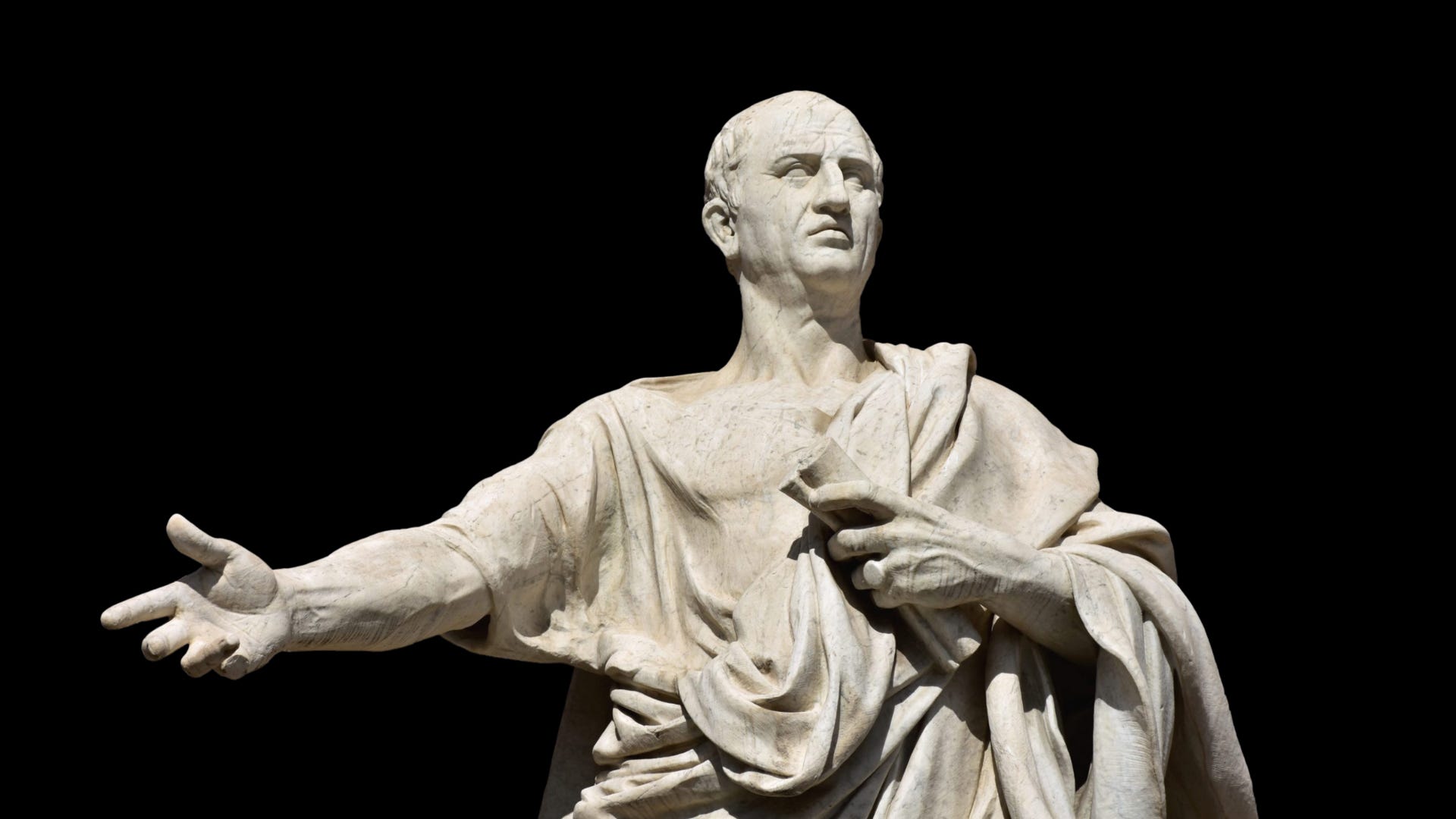
Walk into the twilight of the Roman Republic. Smell incense and sweat. The fear tastes metallic as legions wait at the gates. Today, asphalt and the sterile breath of server rooms have replaced the incense, but fear is as familiar as a city’s hum.
Cicero’s life holds up a splintered mirror, and what it returns is painfully sharp. He was the first to understand that power is never just the sword but also who gets to tell the story. In an age of “alternative facts,” he wouldn’t be a marble statue but a messy, fierce presence. He is the orator trying to hold institutions together with his eloquence. A homo novus with no pedigree, he insisted that politics is first an ethical craft and an architecture of language.
I take inspiration from Cicero because our public life functions through a filter of polarization he would recognize at once. He knew how conversation is eaten by dogma. We wrestle with populism, polarization, and a new algorithmic tyranny. He wrestled with triumvirs. Both reduce people to the crude categories of “friend” or “foe.”
I treat current events as a palimpsest: today’s ink barely hides yesterday’s verses. I want to use this space to read our culture and, with you, uncover what the top layer tries to conceal. To me, literature is not a refuge but the toolset that trains the eye, the stone that sharpens the blade of words.
After a self-imposed exile from opinion journalism—perhaps overcautious, healing my soul and reckoning with harms I may have caused—I return to recover a republican gaze.
I hope to be able to wield irony as a red pencil and logic as a steady hand. My challenge is to show how democracies develop hairline cracks long before whole columns tumble.